


2026-03-24
Urban Mining – Giving Aluminium a Second Life in Modern Architecture
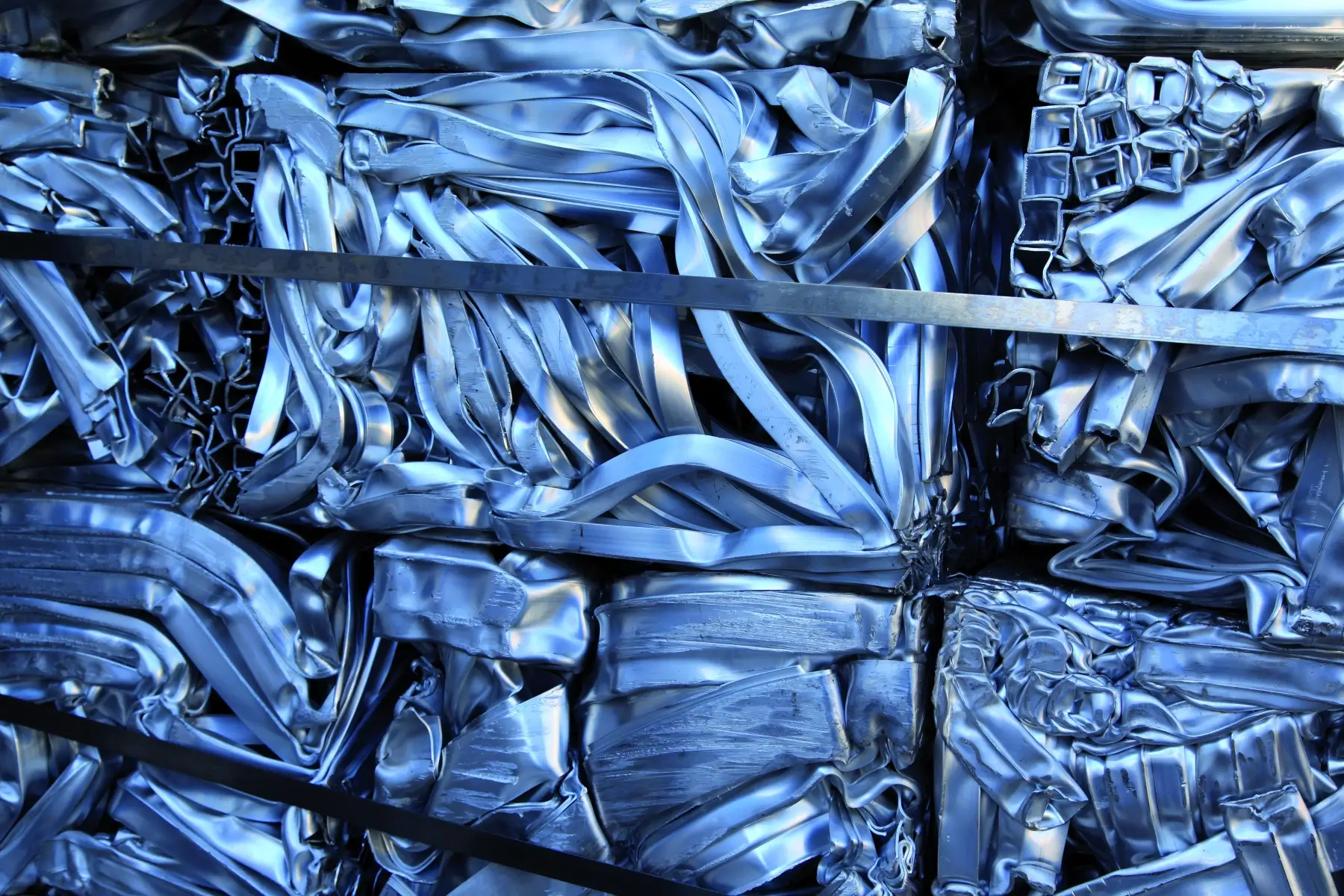
Urban mining is redefining how the construction sector sources materials. At its core lies a compelling principle: the built environment itself is a valuable reservoir of resources. Every building undergoing demolition or refurbishment holds significant potential for reuse. Aluprof actively embraces this approach, producing aluminium profiles from recycled material – reducing both production costs and the carbon footprint of its solutions.
Circular thinking in architecture
Urban mining extends far beyond conventional recycling. It is a technologically driven model that brings circularity to every stage of a product’s lifecycle – including those traditionally overlooked, from end-of-use through to recovery. As natural resources become increasingly constrained, transitioning from a linear “take–make–dispose” model to a circular economy is no longer optional – it is imperative.
According to Deloitte’s “From resource to resource” report, construction and demolition waste accounts for nearly 40% of total waste generated in the European Union. Urban mining is reshaping both architecture and construction, enabling manufacturers to enhance the competitiveness of their solutions. For years, Aluprof has consistently promoted sustainable resource management, with a strong focus on maximising the use of recycled aluminium.
Modern construction is defined not only by technology, but by conscious material selection. Aluminium stands out for its unique properties: it retains its performance across repeated recycling cycles and can be remelted indefinitely without any loss of quality.
“In the construction process, it is essential not only how we build, but above all which materials we choose to use. As much as 75% of all aluminium ever produced remains in circulation, as it does not lose its properties through successive recycling cycles. It can be remelted indefinitely while retaining its full quality. Products manufactured by Aluprof from recycled aluminium meet exactly the same standards as those made from primary metal.” – Aleksandra Baksik, Sustainable Development Manager, Aluprof SA
The environmental and economic value of aluminium recycling
The practical dimension of urban mining can be clearly seen in production processes. Modern, energy-efficient aluminium profiles, which Aluprof uses to manufacture advanced window and door systems as well as sun shading systems, are produced at the Kęty Group’s specialised foundry. Due to its production capacity, the facility is one of the largest and most advanced aluminium recycling centres in Poland. The figures for 2025 alone are particularly impressive, with as much as 36,629 tonnes of aluminium scrap remelted at the foundry.
The benefits of reusing this metal are multidimensional and encompass both environmental and economic aspects.
“For us, recycling aluminium is not only an environmental responsibility – it is a strong business case. Secondary aluminium production requires just 5% of the energy needed for primary aluminium. It reduces water consumption by 95% and reduces dust and gaseous emissions by 90%. This directly translates into cost efficiency and competitiveness.” – Maciej Budziński, Director for Environmental Policy, Grupa Kęty SA
The sourcing of secondary raw material within the Kęty Group is based on two key pillars. The first is post-consumer scrap – material derived from products that have reached the end of their lifecycle, such as dismantled façades or worn-out window systems. The second is pre-consumer scrap, which includes production waste and surplus generated during advanced manufacturing processes of aluminium components and structures. To ensure the highest quality of the final product, strict control procedures have been introduced in the procurement of scrap. As a result, only clean aluminium, free from impurities that could affect alloy parameters, is fed into the melting furnaces.
Low-carbon aluminium profiles for sustainable construction
Processed aluminium scrap is given a new life in the form of innovative products aligned with global circular economy trends. This responds to the rapidly growing demands of the sustainable construction sector. In response to the expectations of increasingly conscious developers and homeowners, as well as architects, Aluprof has developed a specialised range of aluminium profiles, with particular attention paid to emission parameters and a high share of recycled aluminium.
Within this environmentally focused product line, two main variants are available:
- Ultra Low Carbon – ultra-low-emission billets (1.24 eCO₂/kg), including 85% post-consumer recycled aluminium,
- Low Carbon – low-emission billets (2.9 eCO₂/kg compared to the EU average of 6.6 eCO₂), including 65% recycled aluminium.
The use of Low Carbon and Ultra Low Carbon solutions in architectural projects enables developers and homeowners to reduce the total carbon footprint of newly constructed buildings. This represents a significant step towards achieving climate neutrality in the construction sector.
Architecture with responsibility
Despite growing environmental awareness, only around 20% of waste generated by the construction industry worldwide is currently recycled. Aluprof addresses this challenge by implementing innovative technological solutions that optimise its production processes, while actively promoting the idea of urban mining through close collaboration with the architectural community.
A notable example is the new façade of the company’s headquarters in Bielsko-Biała. The architectural concept was developed by Przemo Łukasik from the renowned Medusa Group. What makes this project unique is that the façade will be constructed from aluminium profiles recovered from production surpluses remaining after projects delivered for other clients.
“Architecture of the future must be defined by responsibility and moderation in the use of the planet’s resources. The use of recycled profiles in this project demonstrates that we are ready for a model of construction that not only consumes, but also reuses and reinterprets its own material lifecycle. The idea of urban mining and material reuse has environmental, aesthetic and ethical dimensions. It gives us, as architects, the tools to create valuable spaces in a more sustainable way. However, as always, not everything depends on the architect. We also need an investor who understands not only trends, but the real benefits such actions can bring to our shared planet.” – Przemo Łukasik, Medusa Group
The material has been given a second life, becoming not only a key structural and visual element of the façade, but above all a clear statement of the changes the industry must embrace.
Other news