BLOG



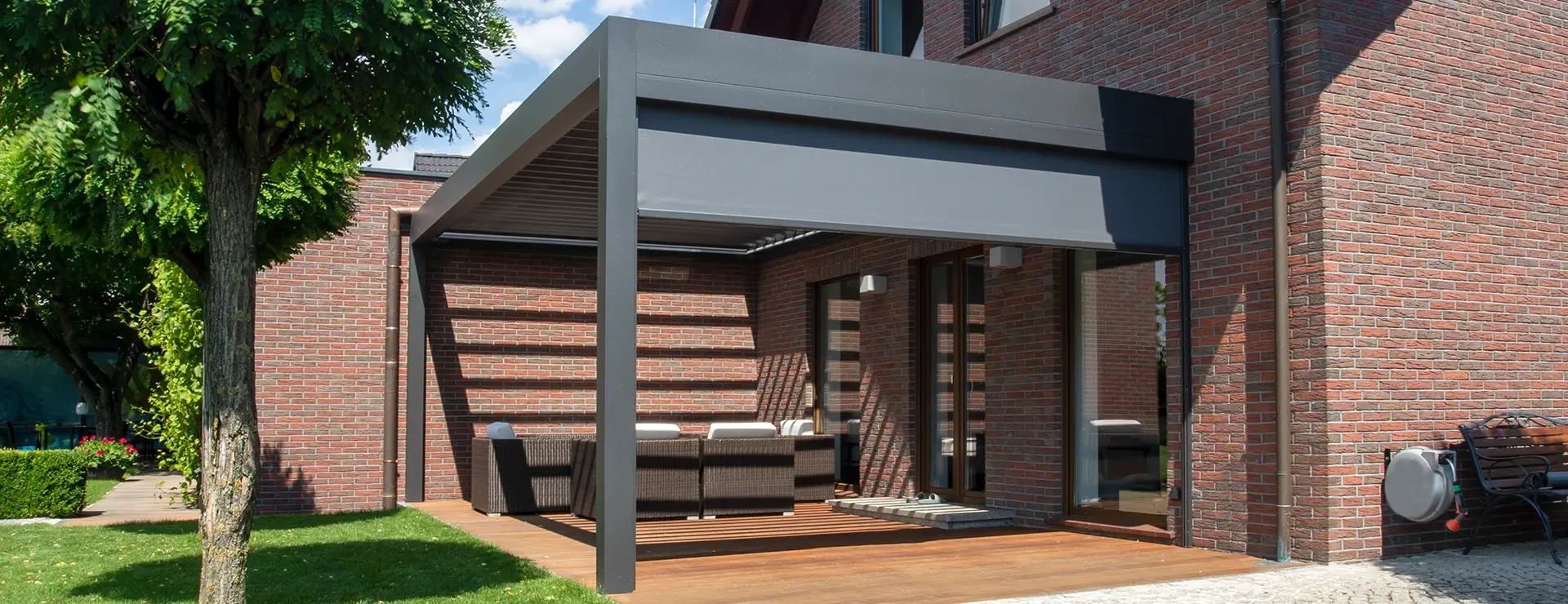
Sunlight hitting the façade and glazing causes rooms to heat up gradually, particularly those facing south and west. This effect is particularly noticeable in modern buildings, where the living room is often connected to the garden via large windows. It is not only the interior of the building that heats up – the temperature of the terrace itself and the furniture on it rises just as quickly. As a result, a space that was intended to be a place of relaxation becomes less comfortable to use for part of the day. This problem is particularly acute during prolonged heatwaves. In such conditions, it is not only the building’s insulation that matters, but also effective protection against solar radiation before it even reaches the glazing.
One of the most effective ways to reduce the heating of a terrace is to create a shaded area. A pergola allows you to control the amount of sunlight reaching the covered area, thereby significantly improving the conditions for using the outdoor space. Unlike fixed canopies, some structures allow you to adjust the level of shade to suit current weather conditions. This means the user can decide whether they prefer more light or more effective protection from the sun.
Adjusting the amount of light
Bioclimatic pergolas fitted with movable roof slats offer particularly extensive possibilities. In structures such as the SB 450, the angle of the slats can be adjusted depending on the time of day and the intensity of sunlight. This allows you to:
This adjustability ensures that the terrace remains functional even at times when the sun is at its strongest.
A pergola does not only affect the outdoor space – in many cases, it also helps to reduce the heating up of rooms located directly behind glazed areas. This is because some of the solar radiation is blocked before it even reaches the glass. As a result, the living room, dining room or kitchen do not heat up as intensely as they would with a completely exposed façade. This does not, of course, mean that a pergola replaces air conditioning. However, it can help maintain a stable temperature indoors and improve residents’ comfort during periods of high temperatures. This is one of the reasons why a terrace canopy is increasingly being factored in at the house design stage.
Which elements of a pergola determine effective protection in summer?
Not every pergola provides the same level of protection from the sun. Its effectiveness is influenced by several factors relating to both its construction and the method of installation. The most important factors are:
In practice, side panels or screens also play a very important role. In the case of the SB450 pergola, these can limit the amount of sunlight coming in from the sides and improve comfort during hot weather. As a result, protection extends not only to the roof but also to parts of the terrace’s side areas.
The effectiveness of a pergola does not depend on a single element, but on the right combination of several features. The better the structure is adapted to the building’s location and how the terrace is used, the greater its impact on comfort during the summer months.
Does a pergola completely block out sunlight?
No. With bioclimatic pergolas, the amount of light can be adjusted by changing the position of the slats. This allows you to shade the terrace without having to completely block out daylight.
How important is the terrace’s orientation in relation to the cardinal directions?
Very important. South- and west-facing terraces are usually more exposed to intense sunlight, so a suitably chosen canopy can have a particularly significant impact on comfort there.
Can a pergola replace other forms of shading?
In many cases, yes, though its effectiveness depends on the design and local conditions. In the sunniest spots, additional shading elements such as side panels or screens are often used alongside a pergola.
Do adjustable slats require complicated operation?
No. In modern designs, their position can be controlled manually or automatically, adjusting the level of shade to suit current weather conditions.
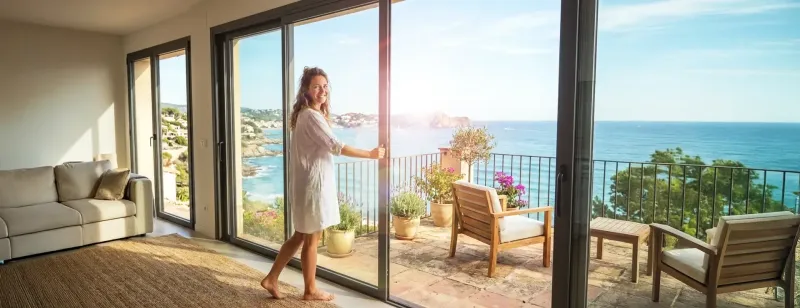
When choosing windows and doors, it is not only their appearance and thermal insulation performance that matter. The opening mechanism plays an equally important role, as it affects ease of use, the amount of space required around the sash, and how easily the room can be ventilat...
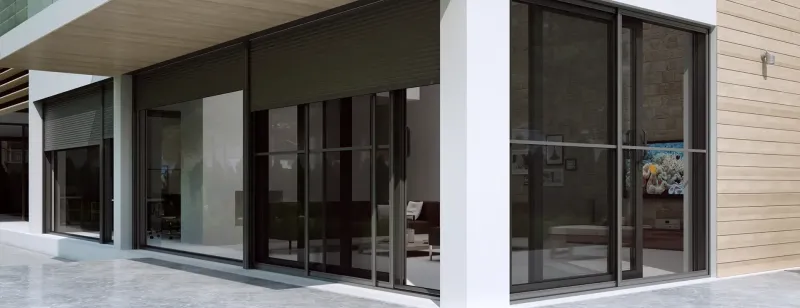
Rising energy costs mean that investors are paying ever closer attention not only to the specifications of windows and doors, but also to the elements that work in conjunction with the joinery. External roller shutters play a key role here – they influence the building’s thermal ...
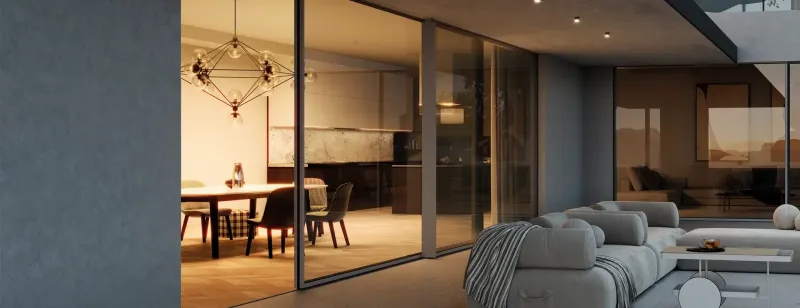
Modern architecture increasingly focuses on space, light and harmony between the interior and its surroundings. As a result, panoramic doors have become one of the key elements of premium designs – in detached houses, flats and modern commercial buildings alike. They now serve no...