BLOG



We have already discussed this in our blog on several occasions: the construction industry accounts for a significant share of global greenhouse gas emissions. The production and operation of buildings generate large volumes of carbon dioxide, thus contributing to global warming. The energy consumed during both the production of building materials and the use of buildings is a key issue.
In the context of windows and doors (or, more generally, joinery), it is essential to ensure that materials are not only durable and functional, but also recyclable, minimizing their environmental impact.
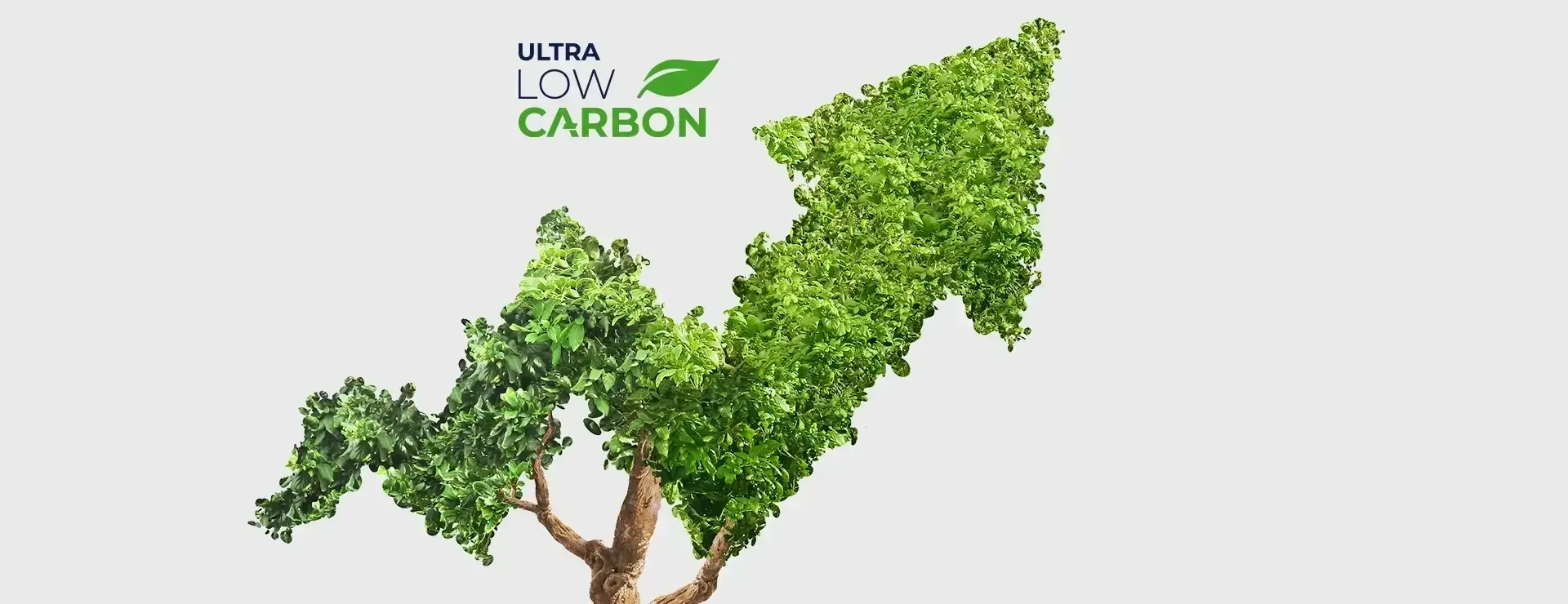
This is where low-carbon aluminum with different environmental impact values plays a role. Aluminum with a value defined as Ultra Low Carbon is a newcomer to the market. To help you understand this issue better, let’s start by defining ingots. Put simply, they are aluminum blocks or bars produced by melting and casting metal. They serve as a raw material for further processing, e.g. to produce the aluminum profiles used in windows and doors.
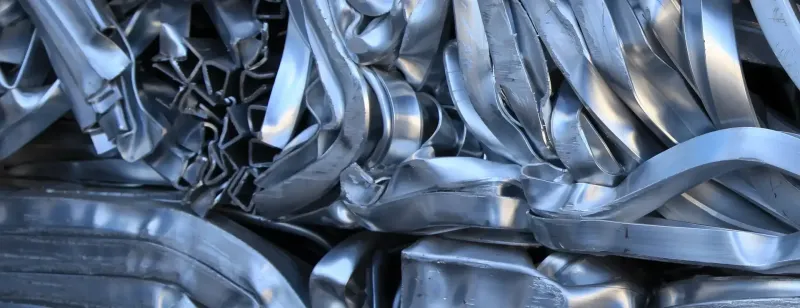
Ultra Low Carbon ingots stand out due to their exceptionally low CO₂ emissions. This is possible mainly because of the use of as much as 85% post-consumer recycled aluminum. During processing, the material retains nearly all of its properties, further reducing the demand for new raw materials and energy.
At Aluprof, we have been taking responsible action for sustainable development for years now. By introducing Ultra Low Carbon aluminum to our portfolio, we are responding to the growing demands of the market and the expectations of environmentally conscious investors.
Production based on advanced recycling processes and the use of modern casting lines significantly reduces the energy consumption, making our windows and doors align with the principles of sustainable construction. By supporting the development of passive and energy-efficient solutions, we also make a contribution to the global efforts to reduce greenhouse gas emissions.
One of the pillars of our strategy is reducing carbon dioxide emissions at every stage of production. We use our own aluminum ingots, produced within the Kęty Capital Group, by implementing advanced selection and processing techniques for “pre-consumer” scrap to achieve high melting efficiency.
What does this really mean? This approach allows us to reduce the energy consumption by up to 95% compared to the production of primary aluminum from bauxite, a major step toward minimizing the carbon footprint and protecting biodiversity.
Additionally, state-of-the-art process lines powered by natural gas and energy-efficient extrusion systems (processing of raw materials by squeeze casting/extrusion) of profiles enable even more efficient resource management.
In addition to reducing the carbon footprint in production processes, Aluprof also focuses on cutting the operational carbon footprint of its products. We continually invest in high thermal insulation solutions that effectively reduce heat loss in buildings.
Our flagship products, such as the MB-79N, MB-86N, and MB-104 Passive windows and doors, stand out for their excellent thermal insulation properties, meeting even the stringent standards of passive construction. Our MB-SR50N HI+ façades enable the construction of energy-efficient curtain walls to improve the thermal balance of buildings and reduce their energy demand.
These solutions help investors to significantly lower their heating and air conditioning costs while reducing the environmental impact of their properties.
An environmentally friendly approach to construction does not entail compromises; on the contrary, it allows you to choose durable, aesthetic and energy-efficient solutions. Ultra low carbon aluminum is a circular and future-proof solution that combines quality with environmental care.
Aluprof’s products include aluminum windows, doors and façades that will help you create a modern, energy-efficient and environmentally friendly home. Make an investment in solutions that not only make life more comfortable, but also support sustainable development.
Take a look at Aluprof’s products and choose environmentally friendly joinery!
Modern construction is increasingly guided by the principles of sustainable development. Investors, architects, and developers are turning to solutions that not only improve user comfort but also minimise the environmental impact of buildings. In this context, international green...
Sustainable design is a topic that is being discussed more and more often, with a focus on energy saving and environmental awareness. Nevertheless, investors remain skeptical because of the numerous myths surrounding sustainable construction. Let’s explode the five most common mi...
One of the key aspects of the efforts made by European Union countries to achieve climate neutrality is industry decarbonization. It involves a substantial reduction in greenhouse gas emissions from things like the manufacture of building materials. To achieve this goal, it is ne...