BLOG



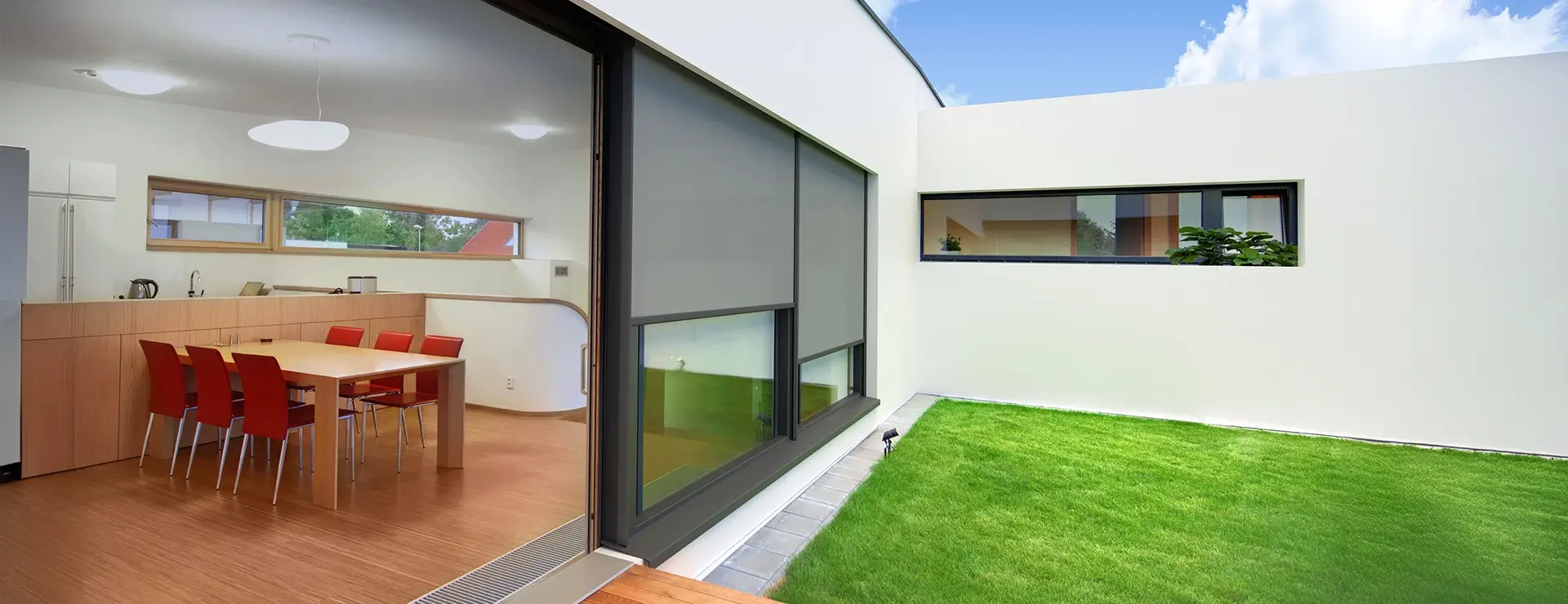
The simplest distinction is as follows: internal shading systems mainly help to regulate light and privacy, whilst external ones affect the performance of the entire building envelope. This is an important distinction, as a roller shutter fitted externally can more effectively limit the heating up of rooms in summer and help prevent heat loss during colder periods. Many users highlight precisely these practical features of external roller blinds: improved thermal comfort, reduced overheating and an additional positive impact on interior acoustics. The option to combine the roller blind with a fly screen is also significant.
In practice, a great deal depends on when the decision to install them is made. If the shutters are planned at the design stage, flush-mounted roller shutters or variants that can be seamlessly integrated into the building’s structure offer the greatest flexibility. If, however, the house is already built and the aim is to retrofit the façade, adaptable roller shutters or those fitted within a recess are more commonly chosen. When planning such shutters, it is advisable to clarify a few basic points.
Such a checklist helps to avoid haphazard decisions. In practice, it is only after analysing these points that it becomes clear whether an external roller blind, a screen or a façade blind would be the better choice.
Facade blinds are particularly useful where, in addition to shading, smooth adjustment of light throughout the day is also important. Their greatest advantage over a traditional roller blind is the ability to adjust the angle of the slats. This allows the user not only to darken the interior, but also to consciously control the amount of light entering the room. For example, SkyFlow façade blinds help protect rooms from excessive heat build-up, whilst ensuring visual comfort and giving the façade a modern look.
This type of shading works particularly well with large glazed areas, modern building forms and in homes where glass is a key architectural feature. In such settings, users usually do not wish to completely cover the windows, but require better light control than is possible with solar control glass alone. Aluprof offers façade blinds in several installation variants, including adaptive, self-supporting and flush-mounted, so they can be adapted to both new buildings and renovation projects. This is important because sunshades should not only be functional but also complement the façade and architectural details.
Facade blins are particularly worth considering when:
This is precisely why these shutters are so frequently chosen for large corner windows, panoramic windows and tall glazed areas in living spaces.
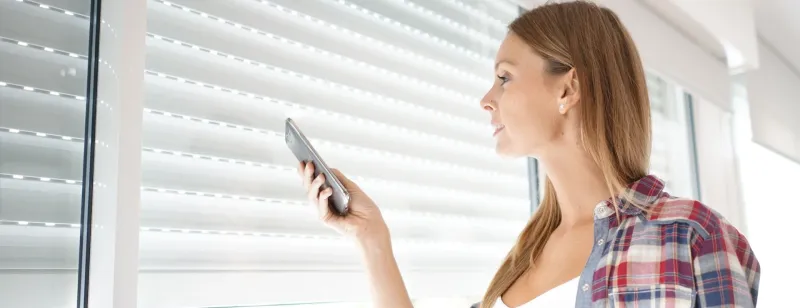
Today, automation is important not only for convenience but also for day-to-day energy efficiency. External roller blinds can be operated manually or electrically, working individually, in groups or centrally, and can also utilise sun and wind sensors. In practice, this is particularly important when a building has several large glazed areas and the user does not wish to control each shading system separately.
A similar principle applies to façade blinds and screens. Fully mechanised shading systems can be integrated with drives and control scenarios tailored to the user’s needs. It is possible to use wall-mounted transmitters, remote controls, group control and home automation control centres. For the investor, this offers a clear benefit: the shading systems can be linked to the daily rhythm of the home, so that they respond to the time of day, sunlight levels and the weather without the need for manual operation each time.
It makes the most sense to plan automation right from the design or renovation stage. With wired control, the electrical installation must be planned in advance, whereas with the wireless option, the amount of modification work is usually less. This is important practical information, as it shows that the integration of roller shutters and blinds with automation is not merely a matter of comfort, but also of organising work on site. The earlier the decision is made, the easier it is to achieve a consistent technical and visual result.
Can roller shutters and blinds be integrated with any window?
Not always in exactly the same way. The possibility of integration depends on the stage of the project, the type of façade, the space available for the box and guides, and whether the shading system is to be flush-mounted, adaptable, top-mounted or self-supporting. In practice, a suitable option can be found for most windows, but the method of connection must be tailored individually to the building.
How can you improve comfort and energy efficiency with external shading systems?
The best results are achieved by combining well-chosen windows with external shading systems and automation. Roller shutters help to reduce heat loss and overheating, external blinds allow for more precise control of light, and automation makes the day-to-day use of the shading systems easier. In practice, such a combination improves thermal, visual and often acoustic comfort, and in the case of larger glazed areas, it can have a real impact on how the whole house is used.
When discussing the energy efficiency of buildings, the most common topics are glazing specifications, the thickness of wall insulation and the performance class of joinery. Far less attention is paid to a phenomenon which, in practice, can determine actual energy losses, comfort...
Choosing the right glazing should be taken just as seriously as choosing the window frame. It is the glass that makes up the majority of a window’s surface area, so it has a significant impact on whether the interior will be warm in winter and better protected from noise. In prac...
Modern construction is increasingly based on the premise that energy efficiency does not stem from a single element, but from the well-designed interaction between windows and doors and sunshades integrated with control systems. In this context, home automation becomes a tool for...