BLOG



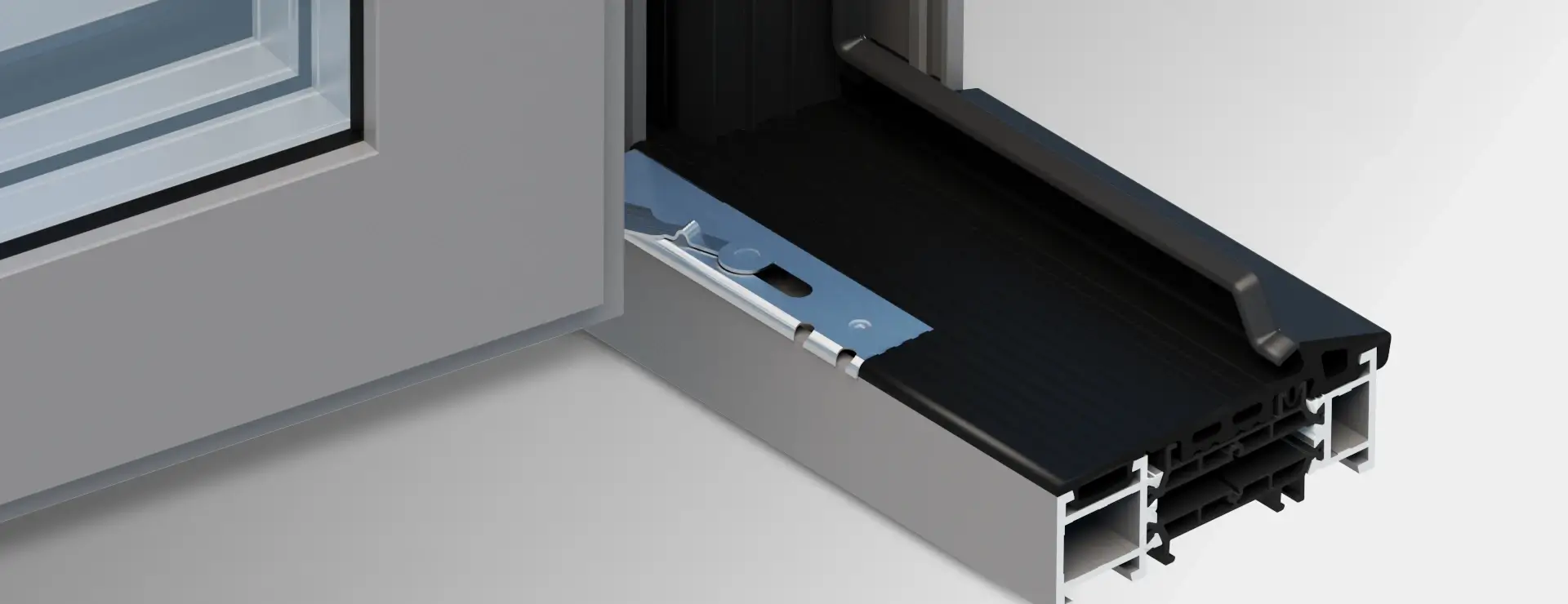
The first characteristic of a good profile is its rigidity. This determines whether the window will remain stable when larger in size and whether the sash will continue to function properly over time. In Aluprof’s range, this is clearly demonstrated by the MB-86N windows, which have been designed with large and heavier structures in mind, whilst maintaining excellent airtightness and thermal insulation performance. If a client is planning larger glazed areas, the profile should not be chosen solely on the basis of its appearance. It must be suited to the window’s dimensions and the anticipated load.
The second important factor is the insulation used in the profile. In aluminium, thermal breaks and seals are of great importance, as they help to reduce heat loss and maintain stable performance parameters. Aluprof’s products incorporate solutions that ensure excellent airtightness. In this context, the MB-104 Passive solar window deserves special attention; its multi-chamber profile construction and thermal breaks have made it possible to achieve performance parameters suitable for passive house construction. From the user’s point of view, this means that the quality of the profile does not stem solely from the thickness of the aluminium, but from its overall construction and how the profile functions as part of the finished window.
It is worth remembering that the profile should also be well suited to the architectural style. In some projects, strength and the ability to create larger glazed areas will be paramount; in others, slender profiles will be the priority. That is why, alongside more versatile options, Aluprof’s range also includes the MB‑SLIMLINE with exceptionally narrow profiles and the MB-Skyline Type S – patio doors with a fully enclosed slotted threshold. This demonstrates that quality is not determined by a single ‘strongest’ profile, but by whether it has been correctly selected to suit the building’s function and the desired effect.
If you wish to assess aluminium profiles before purchasing, pay particular attention to:
Such a list is no substitute for a technical analysis, but it goes a long way towards helping you distinguish a well-designed profile from one that simply looks modern in a catalogue.
Fittings have a direct impact on how a window functions on a day-to-day basis. They are responsible for the smoothness of opening, the seal between the sash and the frame, the ease of closing, and overall ease of use. Aluprof aluminium windows use fittings with either visible or concealed hinges. For the user, this is not merely a visual difference. Concealed fittings give the window a cleaner look and make it easier to keep clean, whilst well-chosen visible fittings can still ensure a very high level of user comfort. The most important thing is that the fittings are suited to the size and weight of the sash.
The importance of fittings is particularly evident where safety matters. For example, MB‑86N windows can achieve burglary resistance classes ranging from RC1 to RC4, whilst MB‑104 Passive windows can achieve RC2 and RC3. This is important information, as security does not depend solely on the glazing or the lock, but results from the interaction between the profile, the fittings and the entire construction of the sash. Good window fittings are therefore important not only for convenience, but also for the actual level of protection your home receives.
It is worth paying attention to a few simple indicators of the quality of fittings:
In practice, much can be assessed simply by examining a sample or a finished window in the showroom. This is a good opportunity to check how the handle operates, how the window closes and the overall impression of sturdiness before making a final decision. Once the windows have been fitted, it is also worth remembering to adjust the fittings to ensure smooth and trouble-free operation.
The quality of aluminium windows can most easily be verified through test results and the certificates obtained. In the case of Aluprof joinery, the following are particularly important:
This overview demonstrates that the performance parameters of the joinery are not merely declared, but confirmed by tests and independent certifications. This enables the client to base their choice on specific, measurable data.
Can the durability of an aluminium profile vary?
Yes. Durability depends, amongst other things, on the profile’s construction, the thermal breaks and gaskets used, resistance to external conditions, and the dimensions for which it is designed. Examples from Aluprof’s range show that different characteristics will be important for large glazed areas, whilst others will be key for slender joinery with a more subtle appearance.
How can you check the quality of fittings before purchasing?
It is best to check whether the manufacturer specifies the types of fittings, the option of using concealed hinges and the security classes, as well as to examine a sample or a finished window. In practice, it is worth paying attention to how smoothly the handle operates, how the sash closes and the overall impression of sturdiness when in use.
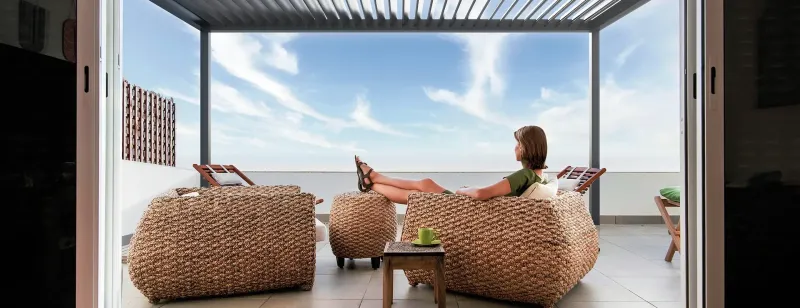
In modern homes, the boundary between the interior and the outdoor space is becoming increasingly blurred. The terrace is no longer merely an addition to the building but increasingly serves as a natural extension of the living room or dining room.
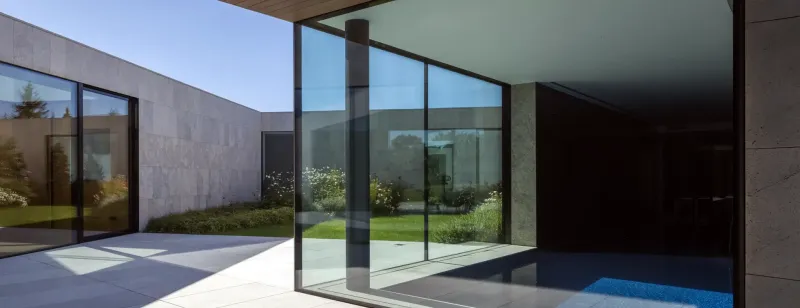
Corner windows are among the features of a house that most significantly alter the appearance of the building and its interior. They let in more light, open up the view and make a room seem larger, but at the same time they require more careful planning than a standard window set...
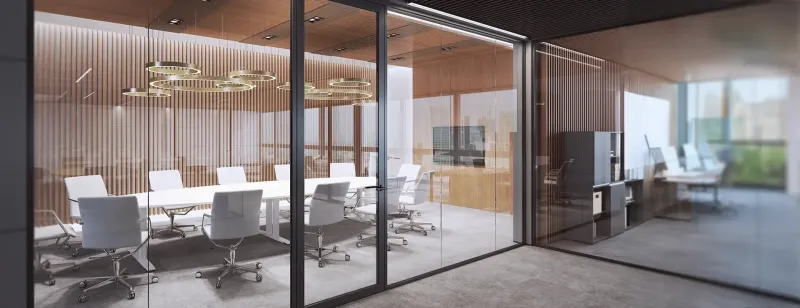
Today, acoustic design is no longer limited to concert halls or recording studios. Good acoustic conditions are just as important in homes, open-plan offices, hotels and schools. Excessive noise can lead to fatigue, concentration problems, and even long-term health effects. That ...